
Family Military History
The Osborne and Hurley families and World War I and II. These two families have common roots in Echo Bay, Ontario and share a proud history of military service.
Their stories and photos are being assembled as a tribute to their service and sacrifice. Many visitors to this site will recognize themselves as the generation holding the responsibility and the best opportunity to document their family's military history for the generation after us and those to follow.
Search Military History
Family Military
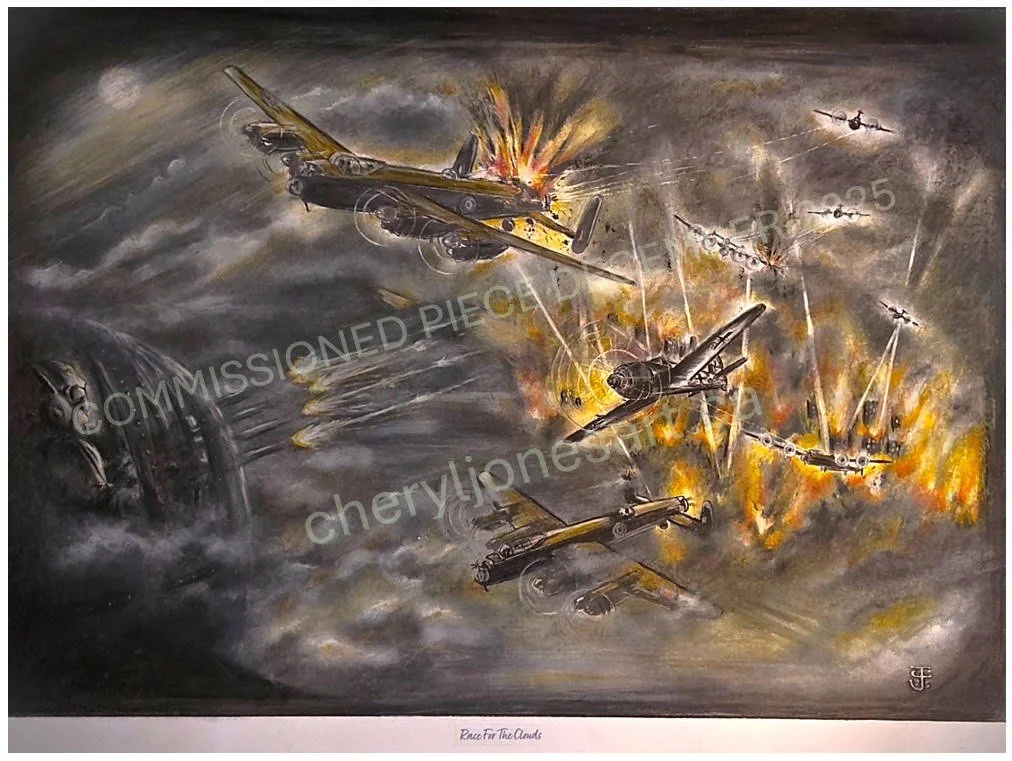
Race For The Clouds
Race For The Clouds - a commissioned artwork illustrating Landcaster bombers in battle.

Private Ernie Osborne
Private Ernie Osborne, B116757, Stormont, Dundas, Glengarry Highlanders, First Battalion, 9th Canadian Infantry Brigade.

Trooper Harry Osborne
From a farm in Echo Bay to a beach in France and a date with destiny

Pilot Officer Roy Thibedeau
Roy Thibedeau got into his turett as the rear gunner aboard a Lancaster.

Flight Sergeant Earl Bock
Earl Bock was a tail gunner on a Lancaster with 626 Squadron based out of RAF base at Wickenby


Other Military Family Members
Other family's wartime military service will be researched and recorded on this site.

Military Travels and Stories
Art Osborne, escorted by United Nations representatives, on a camel ride by the pyramids near Cario, Egypt.
This famous poem reminds us of the obligation we share not to ‘break the faith’ ...
In Flanders fields the poppies blow Between the crosses, row on row,
That mark our place; and in the sky
The larks, still bravely singing, fly Scarce heard amid the guns below.
We are the Dead. Short days ago We lived, felt dawn, saw sunset glow,
Loved, and were loved, and now we lie In Flanders fields.
Take up our quarrel with the foe: To you from failing hands we throw The torch;
be yours to hold it high. If ye break faith with us who die
We shall not sleep, though poppies grow In Flanders fields.
— John McCrae
From Wikipedia, the free encyclopedia
"In Flanders Fields" is one of the most famous poems about World War I, and has been called "The most popular poem" produced by the war.[1]
It is written in the form of a French rondeau. It was written by Canadian physician and Lieutenant Colonel John McCrae on May 3, 1915, after he witnessed the gruesome death of his friend, Lieutenant Alexis Helmer, the day before. The poem was first published on December 7, that year in Punch magazine.
In May 2010, I participated in a military tour to Europe including a Welcome Back Canadians event in Holland and to various military sites in Belgium, including Flanders as well as France and the Netherlands. It included a number of sites of WW1 and WW2 significance to the Osborne and Hurley families wartime military service.
So much service and sacrifice from two families……
Mary and Art Hurley at each end, with left to right Rauleigh, Wilbert, Leta, Norma, Bruce (Bud) and Sylvia
Top left: Millie and Henry Osborne; left to right; Ernie, Ruby, Ruth, Florence, Vera, Harry, Harold
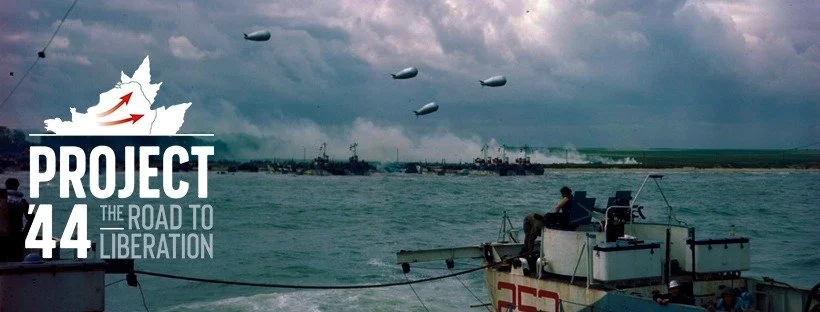
Consider becoming a member of Project ‘44 to support their efforts and add your own family military stories.
Project’44 is an online map of the Western Front of the Second World War, co-created by Nathan Kehler and Drew Hannen from the Canadian Research and Mapping Association (CRMA). The CRMA partnered with museums and partner institutions like the Library and Archives Canada for over three years to digitize war diaries, maps and aerial photographs so that they could be available on the web map. This incredible feat has made over 7,000 pages of text and 7 million words available to the public. Aerial imagery of the Normandy front was supplied by the Institute National de L’information Geographique et Forestiere (IGN). The combinations of these primary source documents are distilled into Project’44 an easy-to-use interactive web map which is at the fingertips of historians and the general public.
Explore here Project '44